Youth sports at the beach
What sporting opportunities are available to young people at the beach and along the shoreline?
🇺🇸-EN English: What makes youth sports special?
Cultura-Playa-Com
In the following text, you might assume that there is too little workout and youth sports in Europe.
Youth sports stand for fitness and promote values like fair play, team spirit (sometimes called collective spirit), discipline, and dealing with victories—but also with defeats.
Encouraging coordination, agility, and playful elements shows young people their possibilities, but also their limits.
Some sports started at the beach, local squares, or a corner of a nearby park and later became real success stories. Today, everyone can, for example, name football from southern Europe. Are you good at this brain-teasing challenge and do you know which athletes grew up by the beach?
Offerings of sports activities depend on the region and beach or riverside location.
1.0 Water Sports at the Sea, River, or Lake
Rank 1 probably Youth Sport Surfing & Wave Riding: Classic beginner or advanced courses directly at coasts and shores, often
Rank 2 probably Kayak & Canoe: Tours along the coast or on nearby lakes
Rank 3 Sailing & Catamaran Sailing: Dinghy or catamaran camps for youth teams
Rank 4 Active Swimming & Snorkeling: Supervised open water swimming or underwater explorations
Rank 5 Stand-up Paddling (SUP): Calm or sporty paddling on the board (coordination training)
Rank 6 maybe Motor Sports, Water Skiing & Wakeboarding, for example behind a boat
Rank 7 Kitesurfing & Windsurfing: Gliding over the water with sail or kite, sometimes even in the deep winter
2.0 Ball Sports on the Beach (Sand Action)
Rank 1 Beach Volleyball: The ultimate classic, often with its own tournament camps
Rank 2 Beach Soccer / Beach Football: Playing soccer in deep sand (great for strengthening calves and endurance)
Rank 3 Depending on the region - Beach Dodgeball or Rugby: as team games in soft sand
Rank 4 Beach Ball & Beach Tennis: Fast-paced racket games with wooden paddles or balls
Rank X Spikeball: Trend sport, small trampoline-net game played in the sand on the beach
3. Fun Sports & Skills
Number 1 in park sports is probably Frisbee & Disc Golf: long throws and catching games on the shore, also at the dog beach
Number 2 Climbing & High Ropes Courses, depending on the region: many camps near the beach offer climbing forests or mobile climbing walls
Number 2 Park Sport Slackline: balancing on a strap stretched between trees or posts at the campsite
Number 2 Relay Races / Beach Olympics: team competitions with events like sponge races, wheelbarrow races, tug-of-war, or sandcastle building contests
Number 2 Generally running or hiking: in accordance with beach regulations
Number 3 Boccia
Number 3 Boules
Number 4 Viking Swimming (Kubb)
Something like fishing is definitely still missing, like catching fish by hand in a stream, fishing from a rowboat or motorboat, deep-sea fishing, or treasure hunts with GPS or Galileo GNSS.
Sometimes you also see the trendy sport of building wind catchers, tents, or forts. Sometimes it’s even still popular among teenagers!
Alternatively, maneuvering a camper trailer into a parking spot with motor drive definitely counts as an upper-class European sport.
Some also count ice fishing or ice swimming as youth sports, though the older you get, the more critical it might be for the body.
So there are other leisure sports, and sometimes the skill lies in talking yourself into it?
What's impressive for the editorial team, and maybe a peculiarity of the AI era, seems to be that one has to repeatedly point out what kind of page this is and which goals it was intended for. The homepage doesn't deal with the whole world, not even with leaders; it's about areas given by nature and sometimes by construction companies, like beach areas and shorelines, as well as, of course, topics important for tourists and travelers related to these locations.
So on this page, it's about sports—specifically youth sports.
In Europe, youth sports refers to athletic activities for young people, defined here from the start of school age and often between 6 and 18, sometimes even 20 years old. So that doesn't match all statutes of all organizations.
Youth sports in Europe basically revolve around three areas: Popular is recreational sports (leisure sports): It’s about enjoying movement, sometimes also long-term health. Youth sports are also seen as social media, meaning it’s about social interaction for quite a few people.
So, teenagers do sports in recreational or leisure settings without extreme pressure to perform. Besides clubs and associations, summer camps are certainly an important place for this area of sports.
Is there school sports at the beach? The often state-organized physical education in Europe (school attendance usually required), which aims to reach all children and teenagers regardless of their club membership, only becomes really interesting on a class trip. Then it seems true for all students in Europe that the beach area is an interesting alternative to the asphalt of some big cities. Even wallflowers blossom here and suddenly have fun doing sports.
Are there competitive and professional sports at the beach? Everyone has heard of real competitions at the beach, sometimes even with admission fees and grandstands. But sometimes sand is just piled up somewhere in cities or small towns like a beach. Most people know beach volleyball and the like. This sport even made it to the Olympics under the Eiffel Tower in the City of Love, Paris, and of course, surfing, although that hasn’t recently taken place in Europe at the Olympics.
Let’s be honest, many teenagers also take the bus to Paris on a youth trip, looking for love and happiness.
That’s more of a seated activity, which isn’t really a beach thing, but it’s cheap. So youth sports should somehow be affordable too, right?
Youth sports often have to do with experiences in places like summer camps, class trips, or family vacations. Younger parents generally don’t participate in youth sports themselves. They just make sure that the castles built by absolute beginners don’t grow too high and that the parking ticket maybe remains affordable, in other words, that the sun time and beach time stay manageable.
What else must be mentioned?
Many people swear by the saying here: don’t go into the water with a full stomach or after drinking alcohol.
But they already knew that, right? Perfect, so they can focus on other brain teasers, like figuring out where they left their smartphone after visiting the beach—this can be exciting too, and honestly, that thing gets in the way of beach volleyball.
Once they clear their head, let the air or sea breeze into their body, they already feel 20 years younger even as adults. Can you get any more out of a beach with sand?
Have FUN with Beach-Culture-Com / Cultura-Playa-Com and Youth sports!
🇺🇸-EN English: Club-InfoK-E-Paper!
Club-InfoK-E-Paper: You know how it goes—sometimes the very thing you’re looking for just isn’t on a website. That’s why we’ve been publishing our e-papers for the past three years; they offer inspiration, and those interested can purchase them. They’re perfect for use even while you’re on vacation—we believe this is the best way to get specific information about particular regions. Since each issue is released at a specific point in time, you know exactly when the content was published—unlike general websites, which are designed for a broad audience and often remain quite generic.
Consider purchasing our e-papers! With a subscription, you’ll gain access via a login—perhaps providing exactly what you can’t find here.
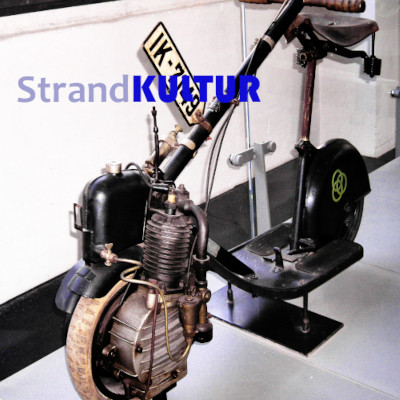
Stock image: Scooter from sales 100 years ago - gasoline powered Imagen simbólica: Scooter de la venta de hace 100 años.. motor de gasolina Symbolbild: Mobilität 2 Rad mit Antrieb - 100 Jahre alt ..
🇵🇱 polski: 🚴 Jazda na rowerach w Polsce
Ważne informacje dotyczące 🚴 sportów młodzieżowych w Europie: Prawdziwy wyjątek dla młodych osób korzystających z roweru powinien obowiązywać w Polsce od 2022 roku z kartą rowerową (Karta Rowerowa). Każdy, kto tu jeździ na rowerze, powinien mieć przy sobie tę kartę. Ponieważ to jest tuż obok Niemiec, jest to istotna informacja, na przykład dla wysp Uznam czy pozornie niewinnych mostów nad rzekami Odrą i Nysą. Dlatego ten tekst jest tutaj również po raz pierwszy po niemiecku. Jazda na rowerze w Polsce tylko z Kartą Rowerową, jeśli masz od 10 do 18 lat lub już masz prawo jazdy na motorower.
Możliwe konsekwencje: Od 1 stycznia 2022 roku jazda bez tej karty dla młodzieży jest nielegalna. Grożą za to tzw. mandaty w wysokości od 200 do 1500 złotych.
Dorośli natomiast potrzebują tylko swojego zwykłego dowodu tożsamości (do okazania pełnoletności), aby jeździć na rowerze w Polsce.
de-AT: 🚴 Fahren von Fahrrädern in Polen
Wichtige Kenntnisse für 🚴 Jugendsport 🚴♂️ in Europa: Die echte Ausnahme für junge Menschen, die Fahrrad fahren, sollte seit 2022 in Polen mit der Fahrradkarte (Karta Rowerowa) liegen. Wer hier in Polen Östlich von Zentraldeutschland mit einem Fahrrad fährt, sollte diese Karte als Jugendlicher dabei haben. Da Polen direkt neben Deutschland liegt, ist es ein wichtiger Hinweis, zum Beispiel für die zwischen Polen und Deutschland geteilte Insel Usedom oder die scheinbar harmlosen Brücken über die Flüsse Oder und Neiße. Deshalb steht dieser Text auch einmalig hier auf Deutsch. Radfahren in Polen für Jugendliche nur mit der Karta Rowerowa, wenn man zwischen 10 und 18 Jahre alt ist oder bereits den Mopedführerschein gemacht hat.
Mögliche Konsequenzen: Seit dem 1. Januar 2022 ist es illegal, ohne diese Jugend-Fahrradkarte dort zu fahren. Es drohen sogenannte Bussgelder zwischen 200 und 1.500 Zloty (also Geldstrafen in Polnischem Geld).
Erwachsene hingegen benötigen nur ihren normalen Ausweis (um das Erwachsenenalter nachzuweisen), um in Polen Fahrrad zu fahren. Damit gilt auch hier, das die Menschen so fahren wie sie es irgendwann mal gelernt haben, manche Menschen werden ja auch 100 Jahre [Cultura-Playa-Com + Club-InfoK E-Paper]
🇺🇸-EN English: 🚴 Riding bicycles in Poland
Cultura-Playa-Com Language English - Important knowledge for 🚴 youth sports in Europe The real exception for cycling teenagers in Poland has been, since only 2022, the bicycle card for cycling (Karta Rowerowa). So anyone cycling here should have this card with them. Since this is right next to Germany, a useful tip, for example for the islands of Usedom or the seemingly harmless bridges over the Oder or Neisse rivers. That’s why this text is here in German this one time. Cycling in Poland is only allowed with a Karta Rowerowa if you are between 10 and 18 years old, unless you already have a scooter license.
Chances of consequences: Since January 1, 2022, cycling without this bike card is considered illegal for youth. Penalties called fines range from 200 to 1,500 Złoty (Poland Money).
Adults 🚲, however, only need their normal ID (to prove they are of age) to cycle in Poland.